
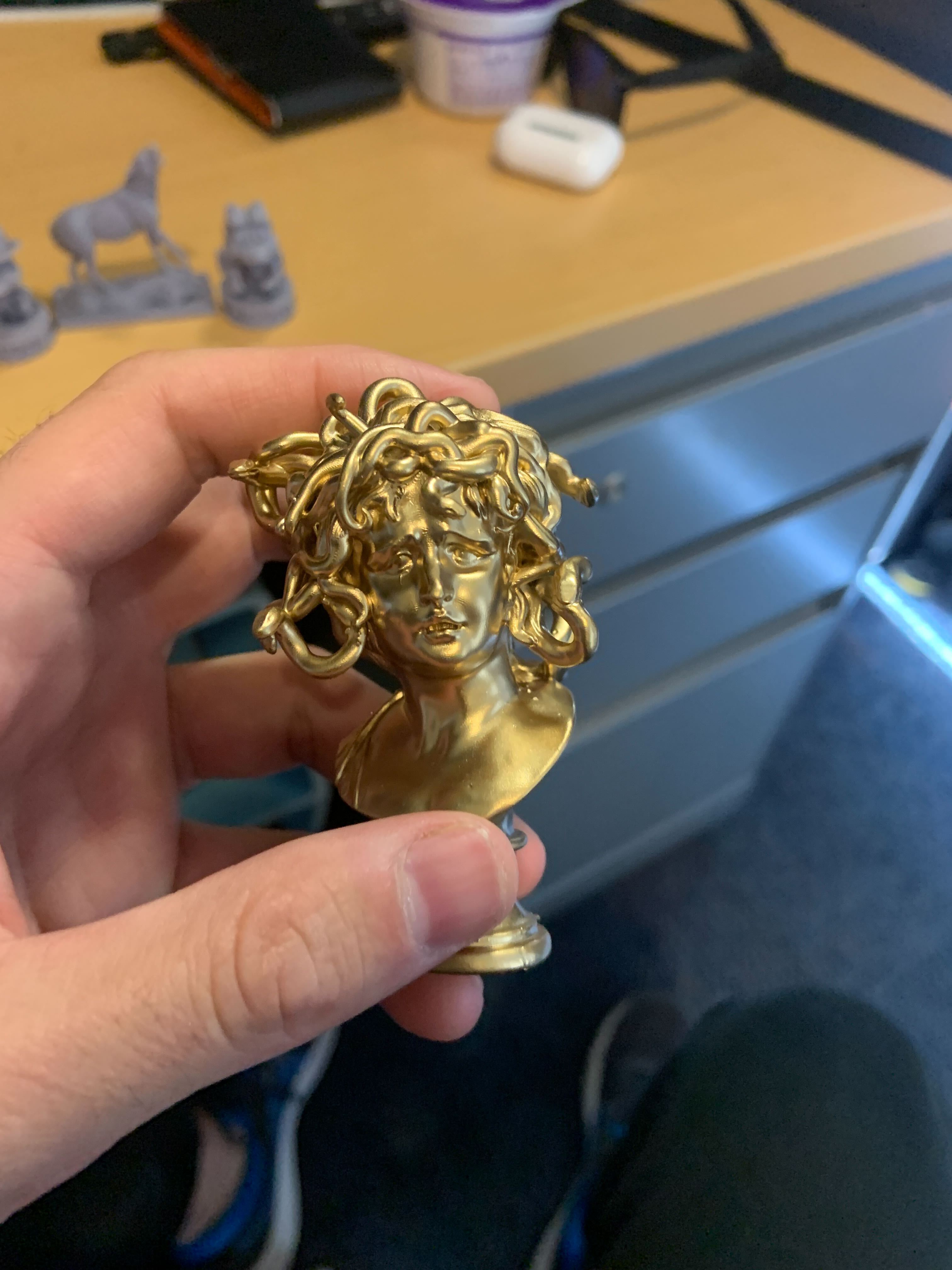
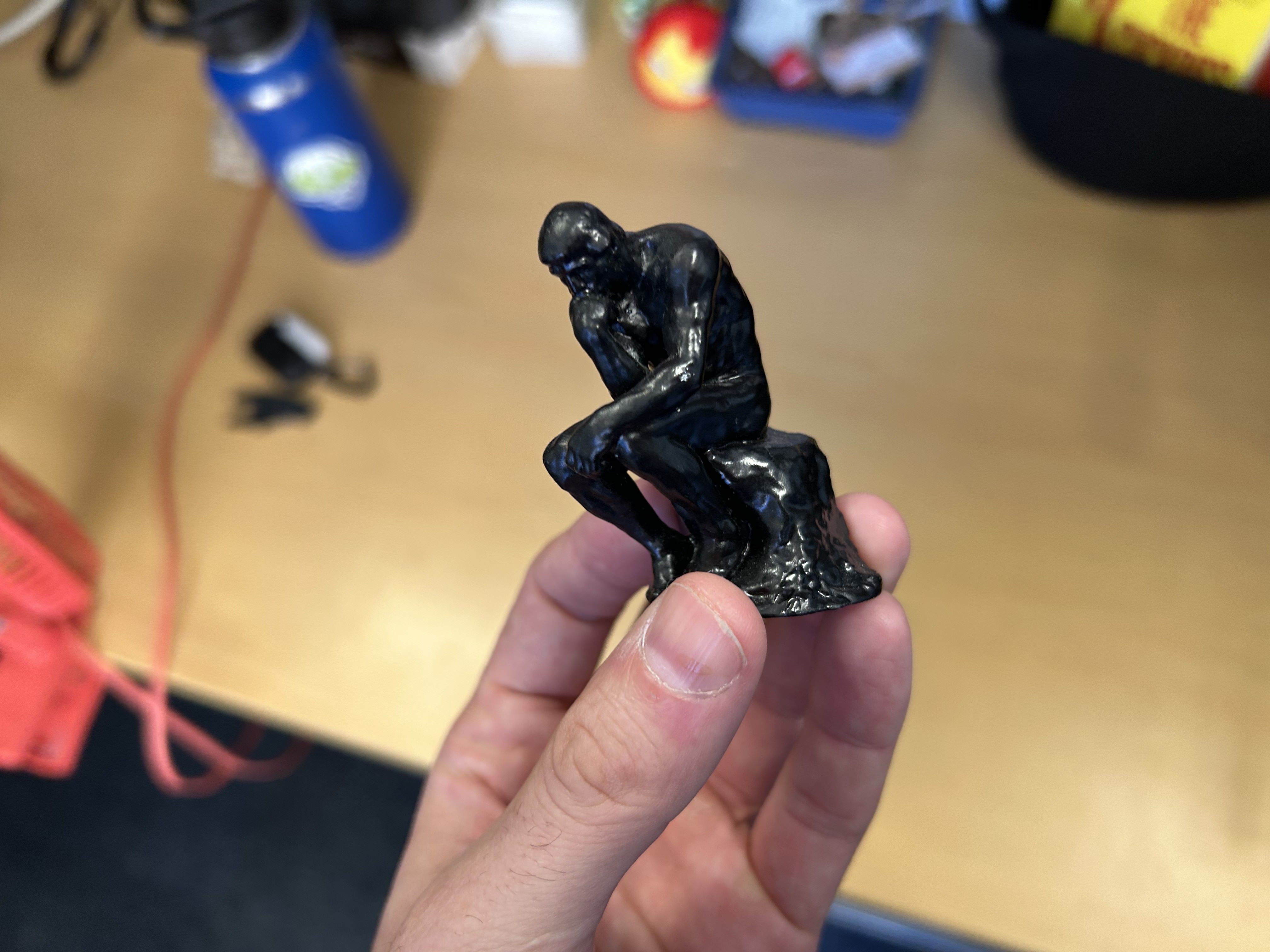
This page is pretty much just going to be a collection of some of the random things I've designed or printed, All the scans are from Scan the World, who publish them for free, or noted otherwise. Enjoy!
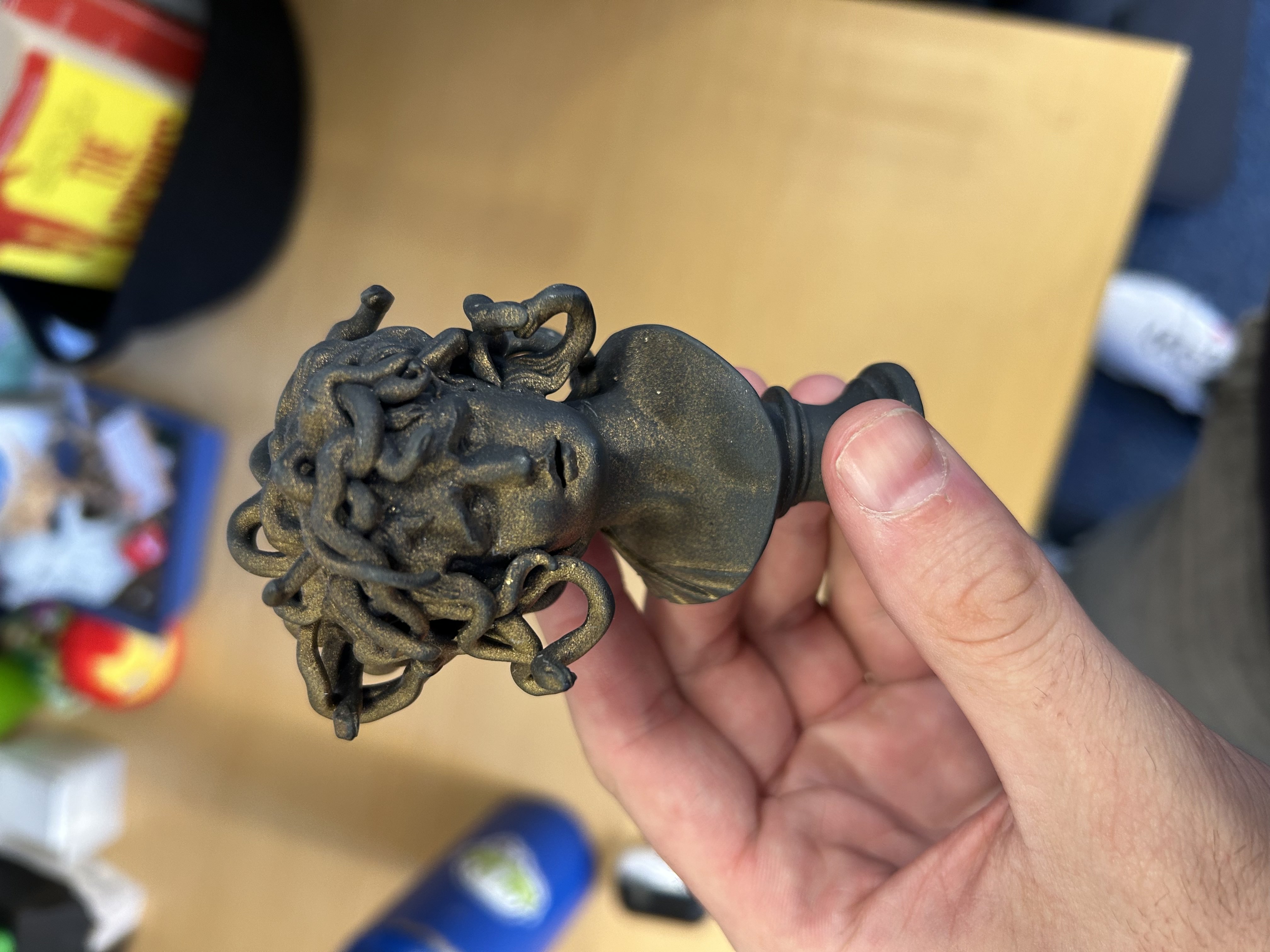
Probably my favorite resin print. It took a while to set up the supports for it (those snakes get really detailed!), but it was worth it. Medusa is always depicted as being this almost cartoonishly evil entity. But if you read her story, she's really a tragic figure who has been cursed for something that wasn't her fault. The statue / bust does an incredible job of capturing that tragic nature, specifically in the eyes (also the details in the snakes fighting each other as well). And now you don't have to travel to Rome to see it, you can see the details just by holding it in your hand!
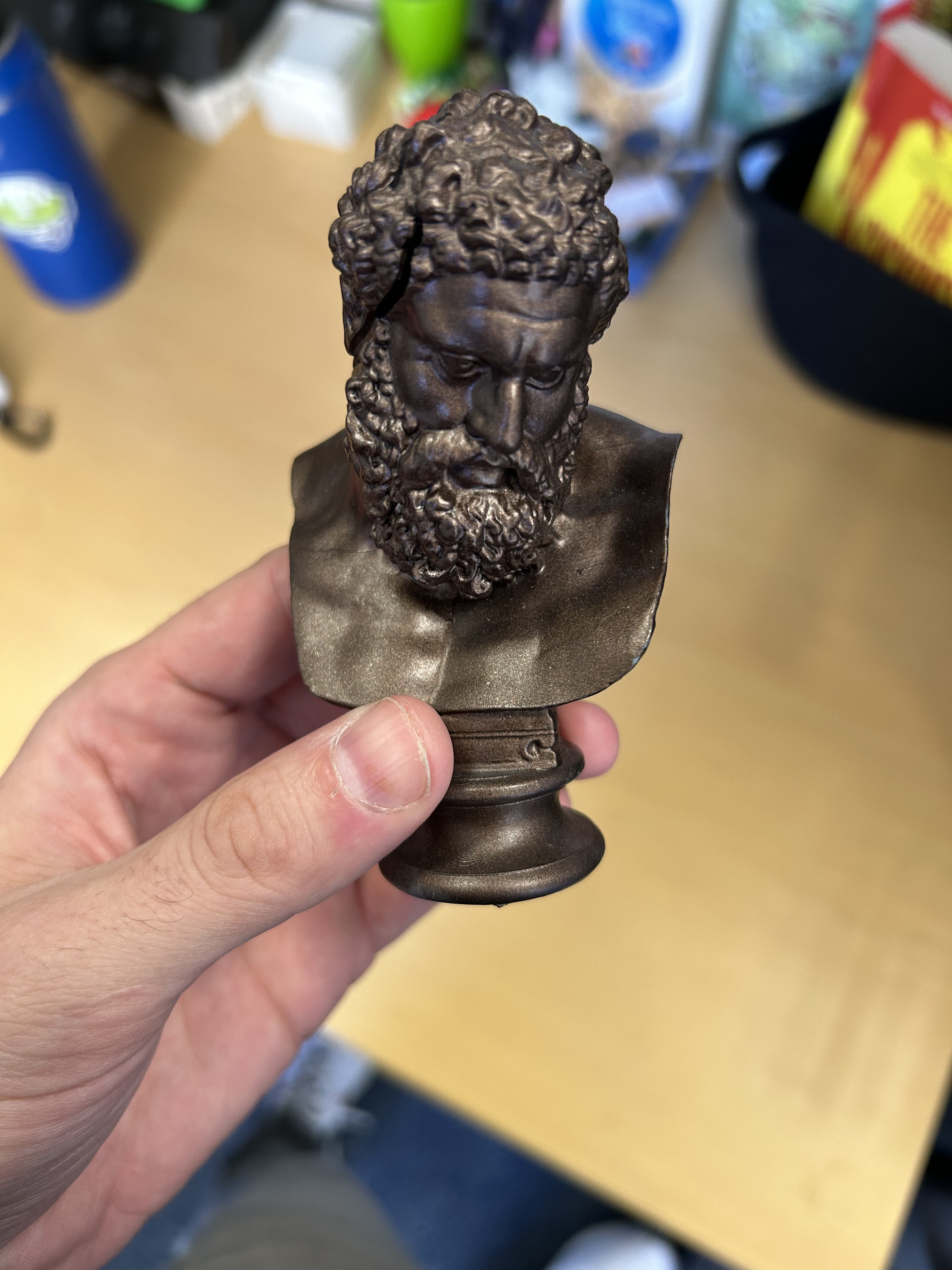
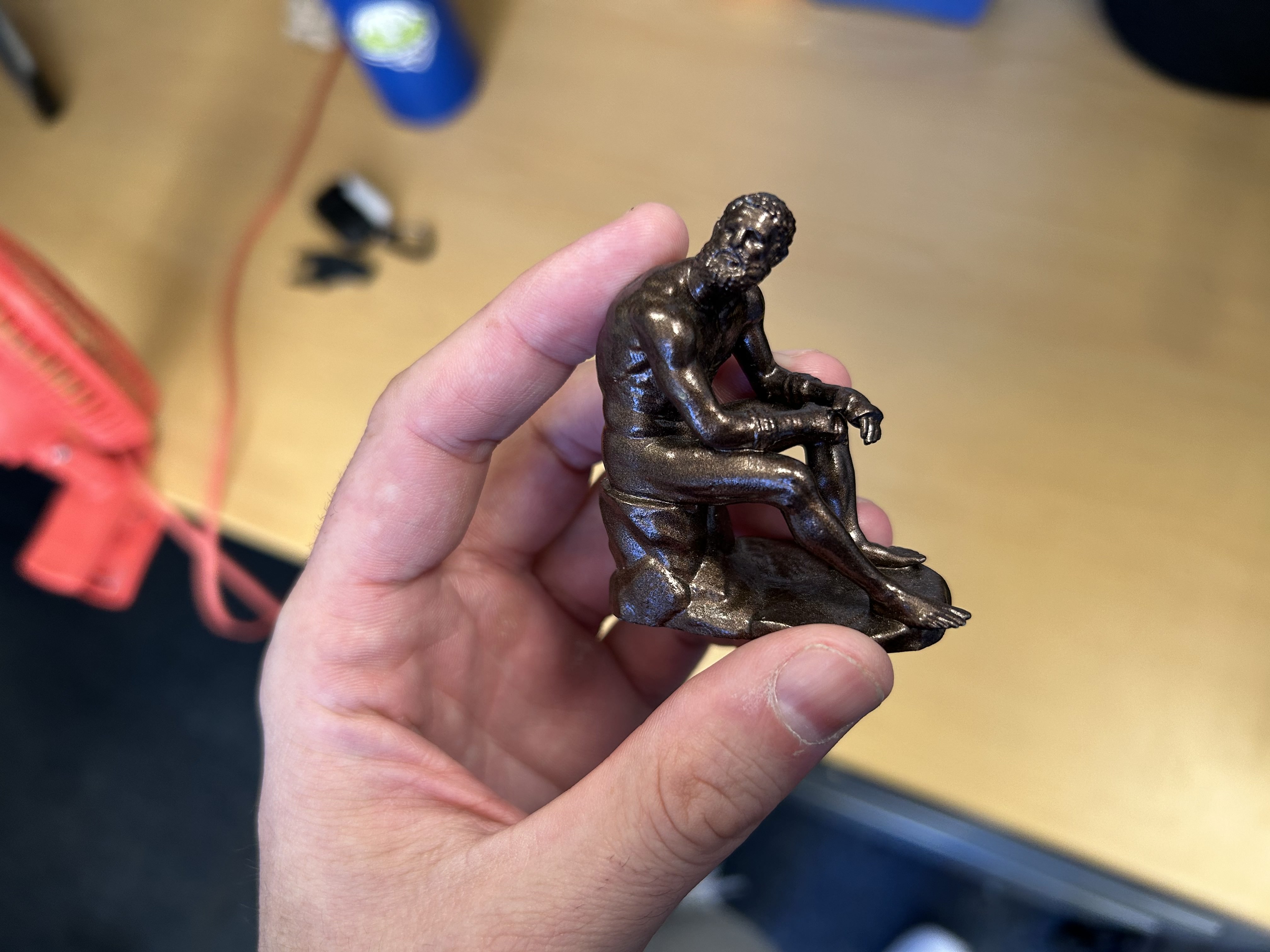
Hercules, spray painted bronze. I accidentally dropped it and it cracked near the top. It kinda goes really well though? As Bob Ross would say "it's a happy accident."
.jpg)
&
Hematite Taweret AmuletThis was a fun one. I actually had a professor of Egyptian history reach out to me after they heard about some of the other things I've made. They said they already had the scans of some of the pieces they've worked on, wanted to see if I can take the scans and print them. The Serapis model was really fun, as it did not have the stand with it originally, so I threw it into blender, looked through the blender 3D model marketplace for pre-made statue stands, then added it onto the original model (I can't recall if the professor said it matched the same time period as the statue though...).
.png)
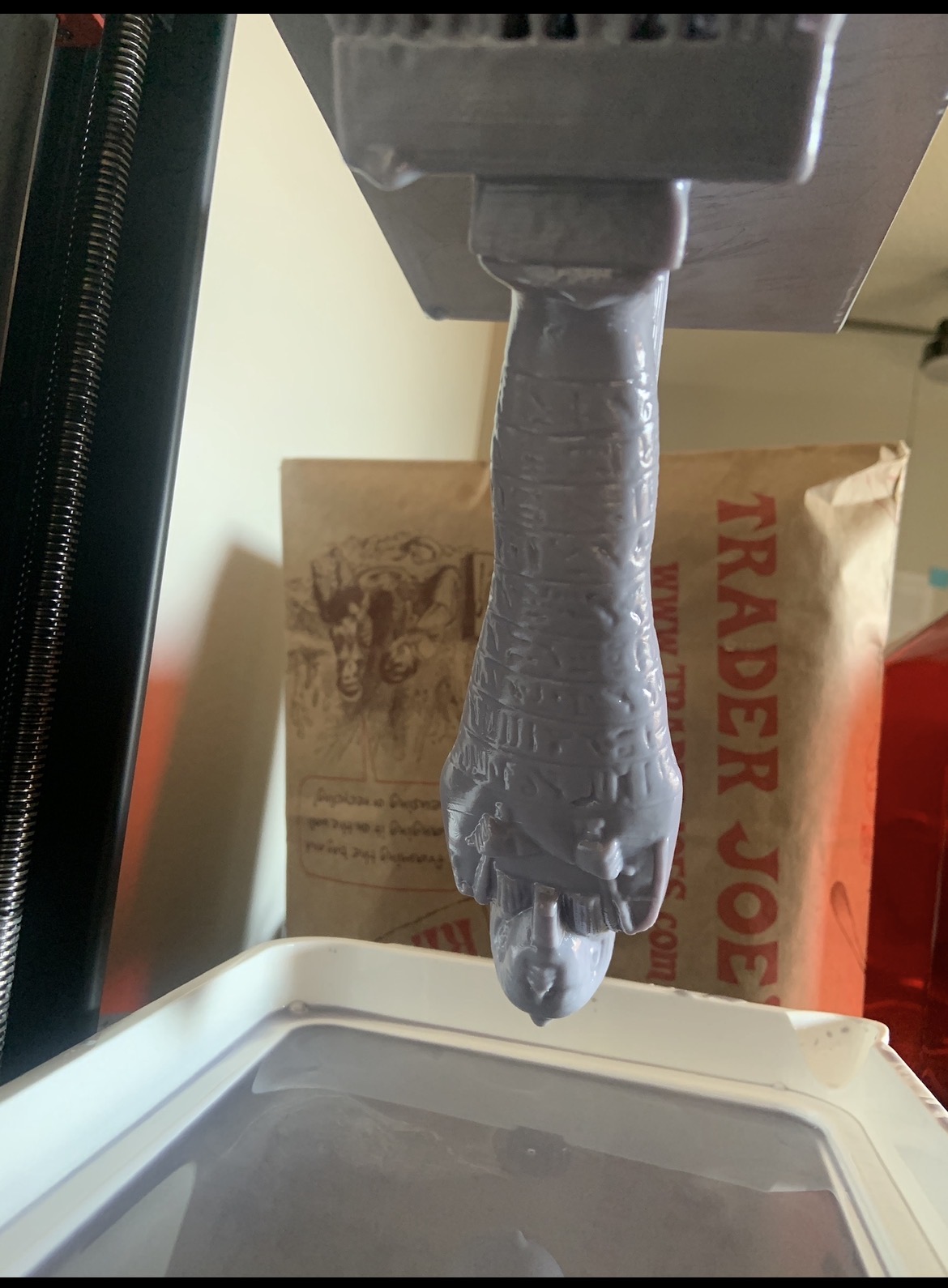
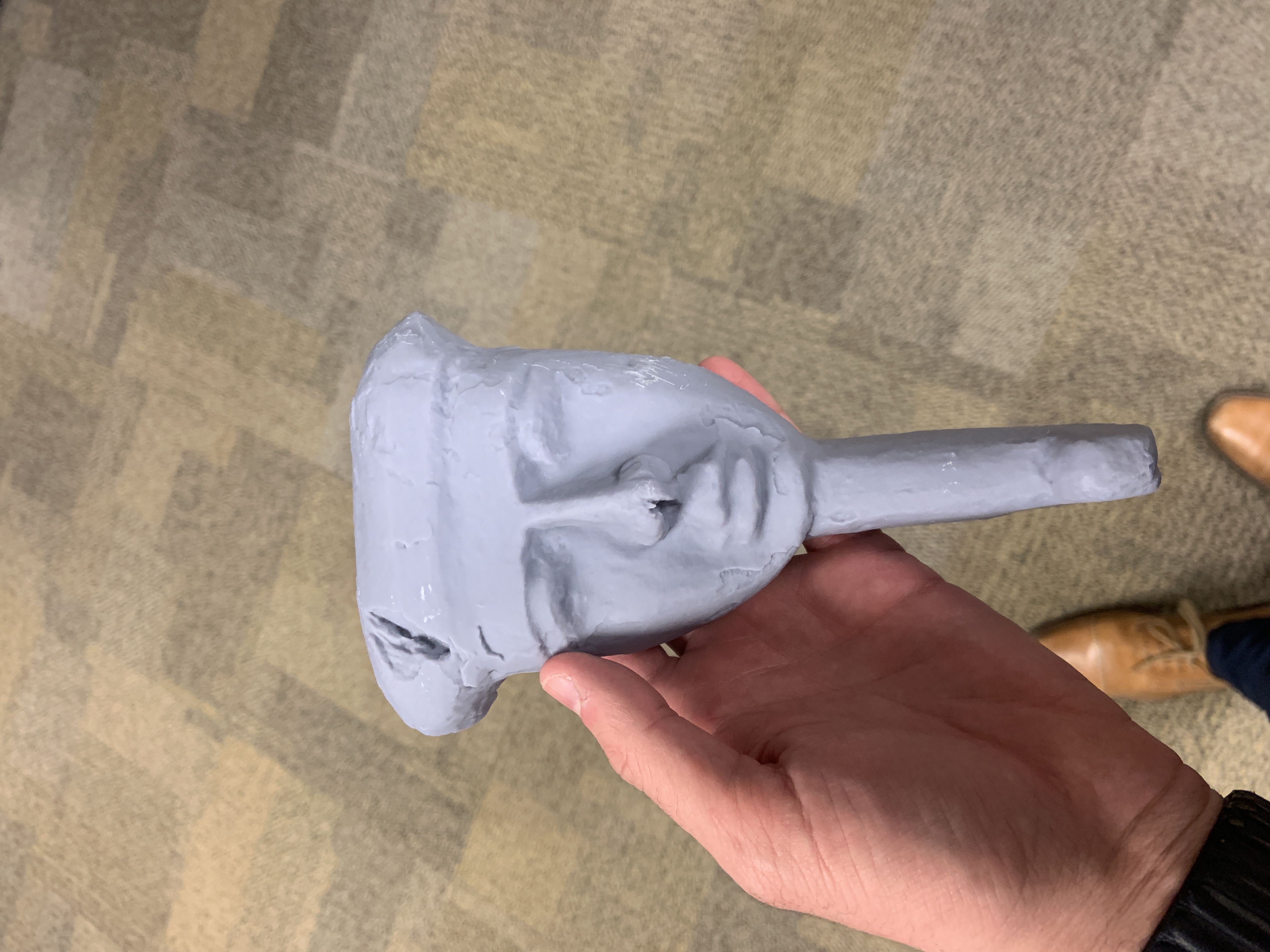
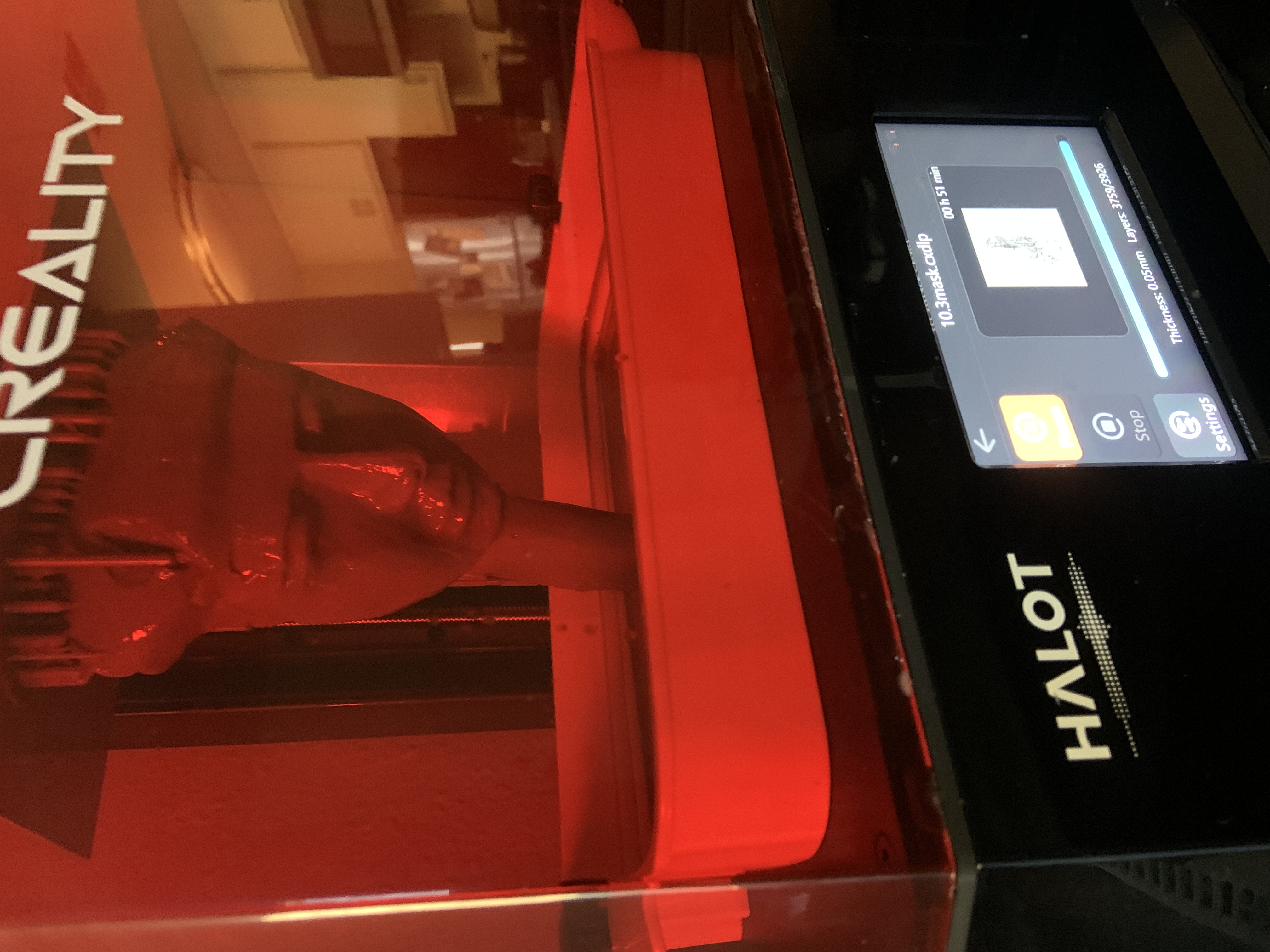
I'm literally just going to copy and pasted the write up for this here, original link above: "This is an example of an Ancient Egyptian magical funerary statue, called a ushabti or “answerer.” Their purpose was to answer a call their owner might receive to perform tax labor in the afterlife. This ushabti is one of 399 that the archaeologist W. M. Flinders Petrie excavated in the tomb of an Ancient Egyptian prophet of the goddess Neith named Horwedja at the archaeological site of Hawara in 1889. It is an excellent example of a Late Period ushabti, which is made in the shape of a wrapped mummy holding the tools imaged for his afterlife labor: a pickax and bag. The inscribed text is a variant of Hans Schneider’s Type VIIA of the “Shabti Formula” commonly found on ushabtis of the time. This text magically empowered Horwedja to use the ushabti to get out of his work in the afterlife." Bonus pic of it while still on the printer.
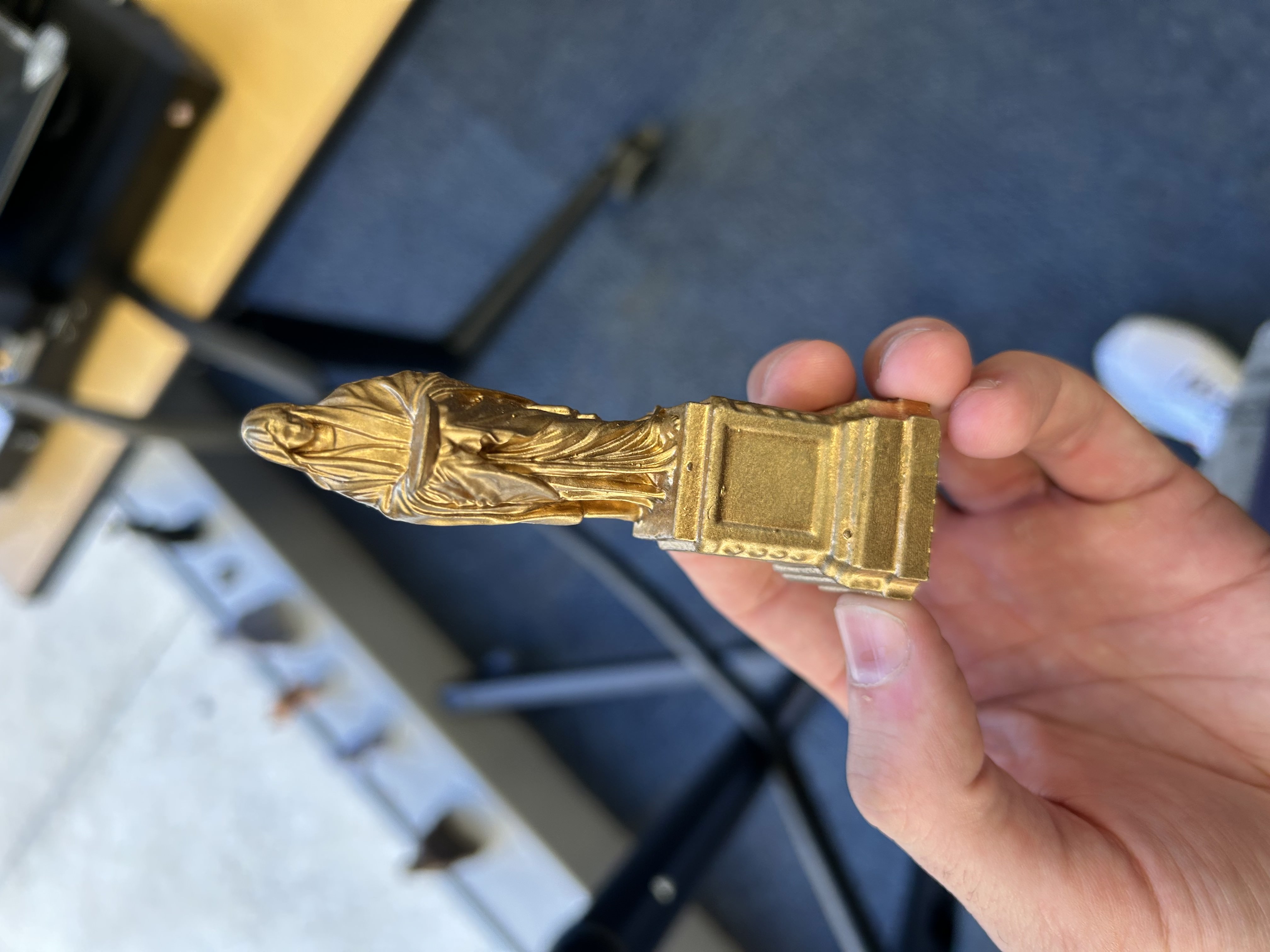
"In ancient Roman and Thracian (Getae) religion, the Vestals or Vestal Virgins were priestesses of Vesta, goddess of the hearth. The name of the Goddess means straight "The News-bearer". The College of the Vestals and its well-being was regarded as fundamental to the continuance and security of Rome. They cultivated the sacred fire that was not allowed to go out. The Vestals were freed of the usual social obligations to marry and bear children, and took a vow of chastity in order to devote themselves to the study and correct observance of state rituals that were off-limits to the male colleges of priests."
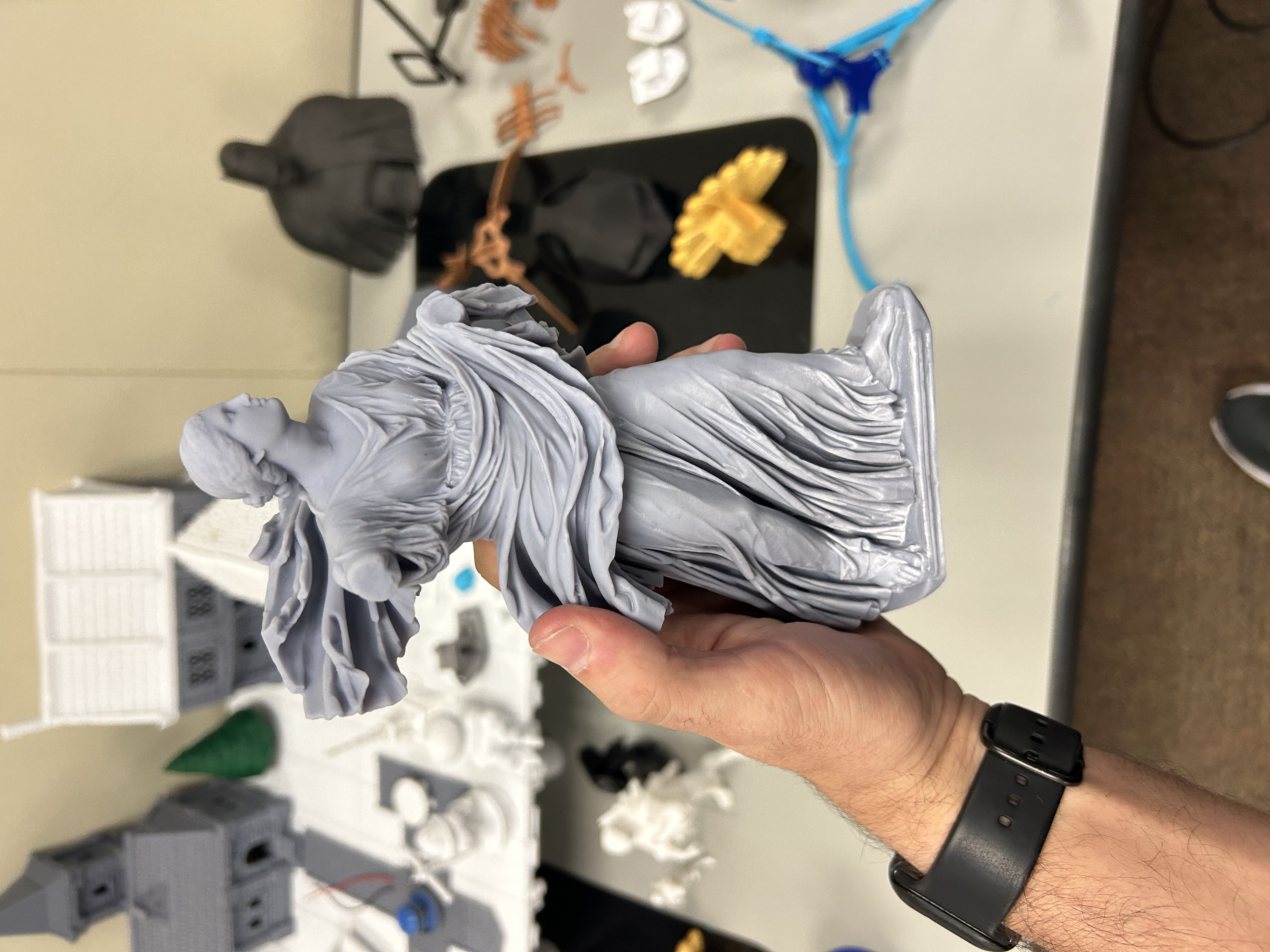
"This statue represents one of the daughters of Niobe as she attempts to escape from the arrows of Apollo and Artemis. The myth, in fact, tells how Niobe, Queen of Thebes, had 14 children, seven boys and seven girls, and for this considered herself to be superior to Leto, who had only been able to bear Zeus two children, Apollo and Artemis. These two gods undertake to punish Niobe for offending their mother and they kill all of Niobe's children with arrows, Apollo killing the males and Artemis killing the females. This figure is probably a copy from the age of Hadrian which was perhaps part of a group sculpture featuring all of the Niobids. Different versions of this group are known, all of which are copies of a group dating from the Hellenistic period, the most complete of which is to be found in the Uffizi Galleries in Florence. This work was found around the middle of the 1500s at Hadrian's Villa near Tivoli during the excavations organised by Cardinal Ippolito d'Este. This cast from The Statens Museum for Kunst originates from that of the Vatican's Copy, and fused with a head from another copy of the Florence type"
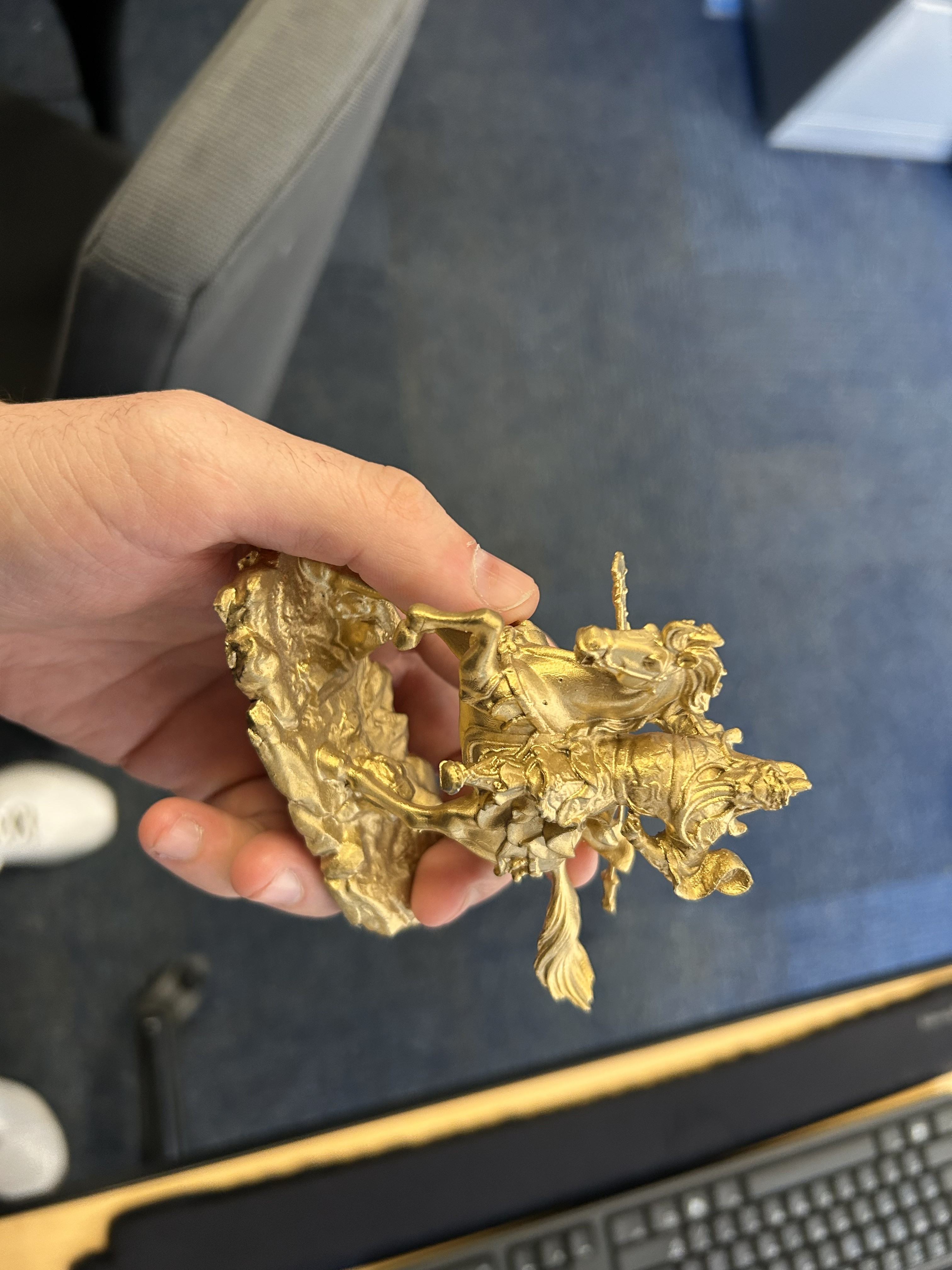
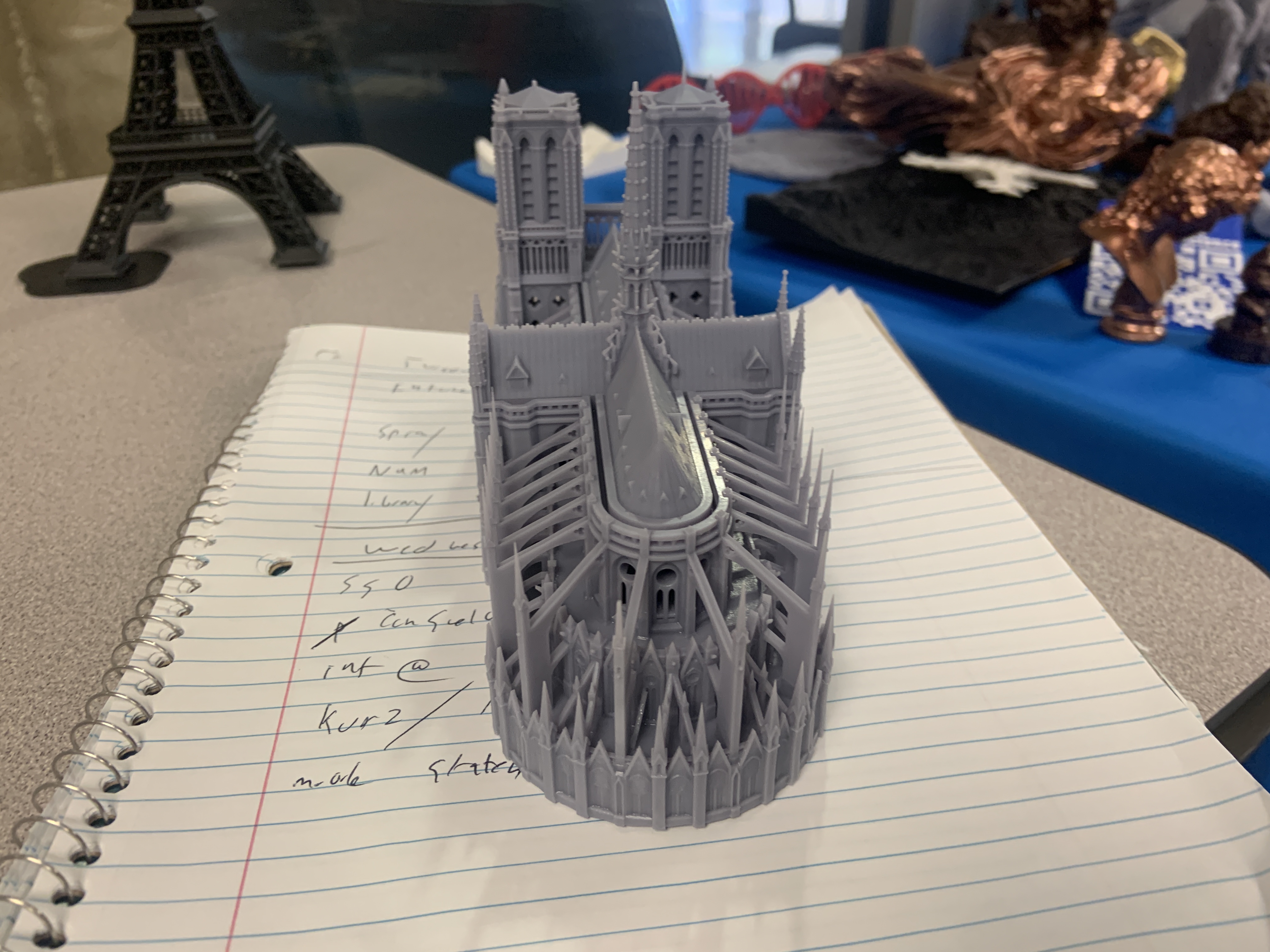
The most challenging print I've made, mostly due to the incredibly small details that all needed supports to sucessfully print. Even if you add the supports correctly, there's the fun part of having to remove the supports, which is its own fun endeavor. Now that it's done though, it's one of my favorite prints.
"Guan Yu (died 220 CE), courtesy name Yunchang, was a general serving under the warlord Liu Bei in the late Eastern Han dynasty. He played a significant role in the events that led to the collapse of the dynasty and the establishment of the state of Shu Han – founded by Liu Bei – in the Three Kingdoms period. After Liu Bei gained control of Yi Province in 214, Guan Yu remained in Jing Province to govern and defend the area for about seven years. In 219, while he was away fighting Cao Cao's forces at the Battle of Fancheng, Liu Bei's ally Sun Quan broke the Sun–Liu alliance and sent his general Lü Meng to invade and conquer Liu Bei's territories in Jing Province in a stealth operation. By the time Guan Yu found out about the loss of Jing Province after his defeat at Fancheng, it was too late. He was subsequently captured in an ambush by Sun Quan's forces and executed. As one of the best known Chinese historical figures throughout East Asia, Guan Yu's true life stories have largely given way to fictionalised ones, most of which are found in the 14th-century historical novel Romance of the Three Kingdoms or passed down the generations, in which his deeds and moral qualities have been lionised. Guan Yu is respected as an epitome of loyalty and righteousness. Guan Yu was deified as early as the Sui dynasty and is still worshipped by many Chinese people today in mainland China, Taiwan, Hong Kong, and among many overseas Chinese communities. In religious devotion he is reverentially called the "Divus Guan" (Guāndì) or "Lord Guan" (Guāngōng). He is a deity worshipped in Chinese folk religion, popular Confucianism, Taoism, and Chinese Buddhism, and small shrines to him are almost ubiquitous in traditional Chinese shops and restaurants. His hometown Yuncheng has also named its airport after him.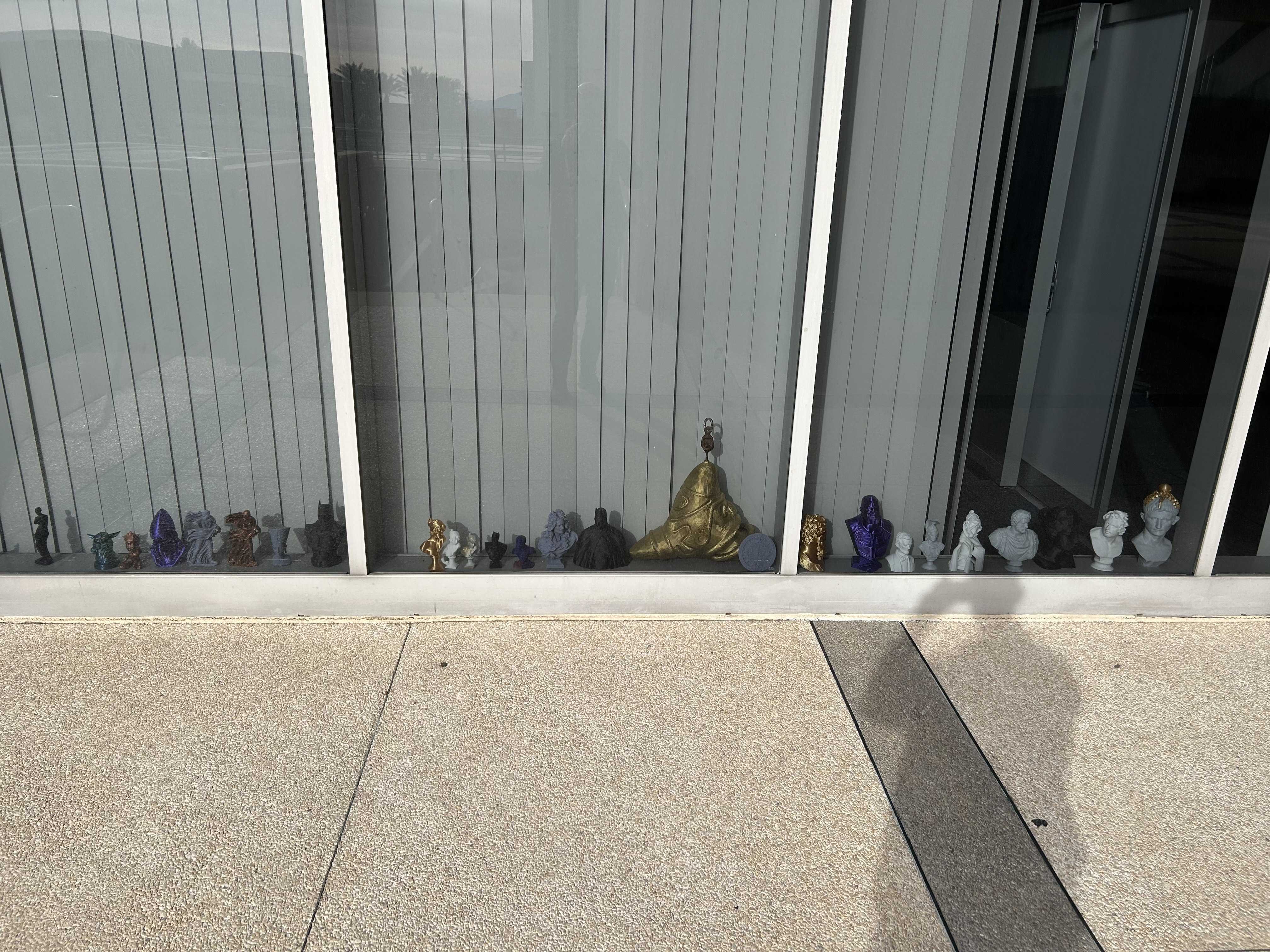
I like putting some of the larger prints in my office window for folks walking by to check out. It's also led to a number of folks then coming into my area and asking "are those your prints in the Window?" This then has led to a lot of print requests and cool ideas as well.
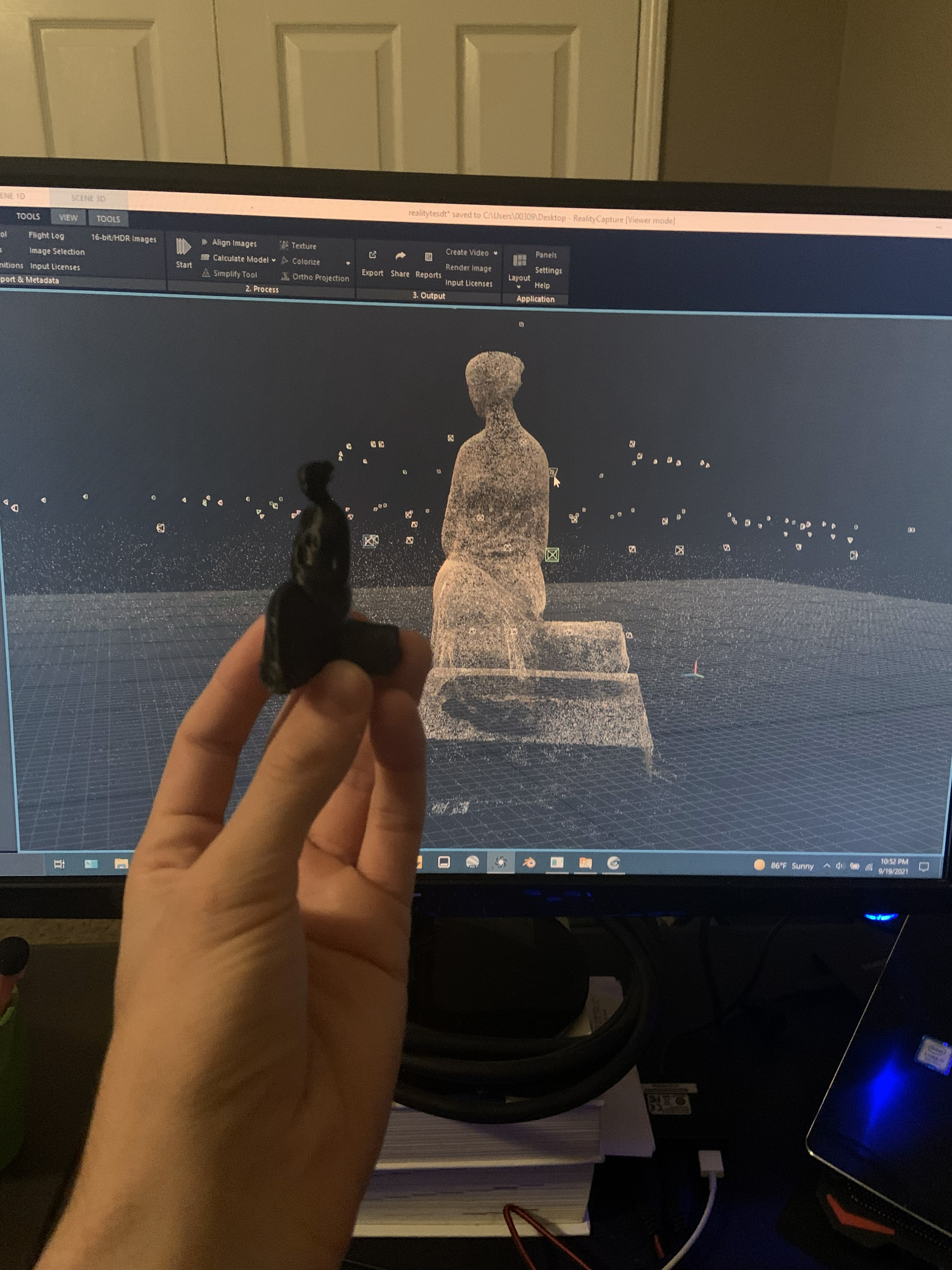
The first thing I ever made with photogrammetry. Photogrammetry basically takes a bunch of photos of an area of object, which you then "stitch" together in a program like Reality Capture. The photos for this were freely available online, so I could just download them and run the program, which saved me a lot of legwork.
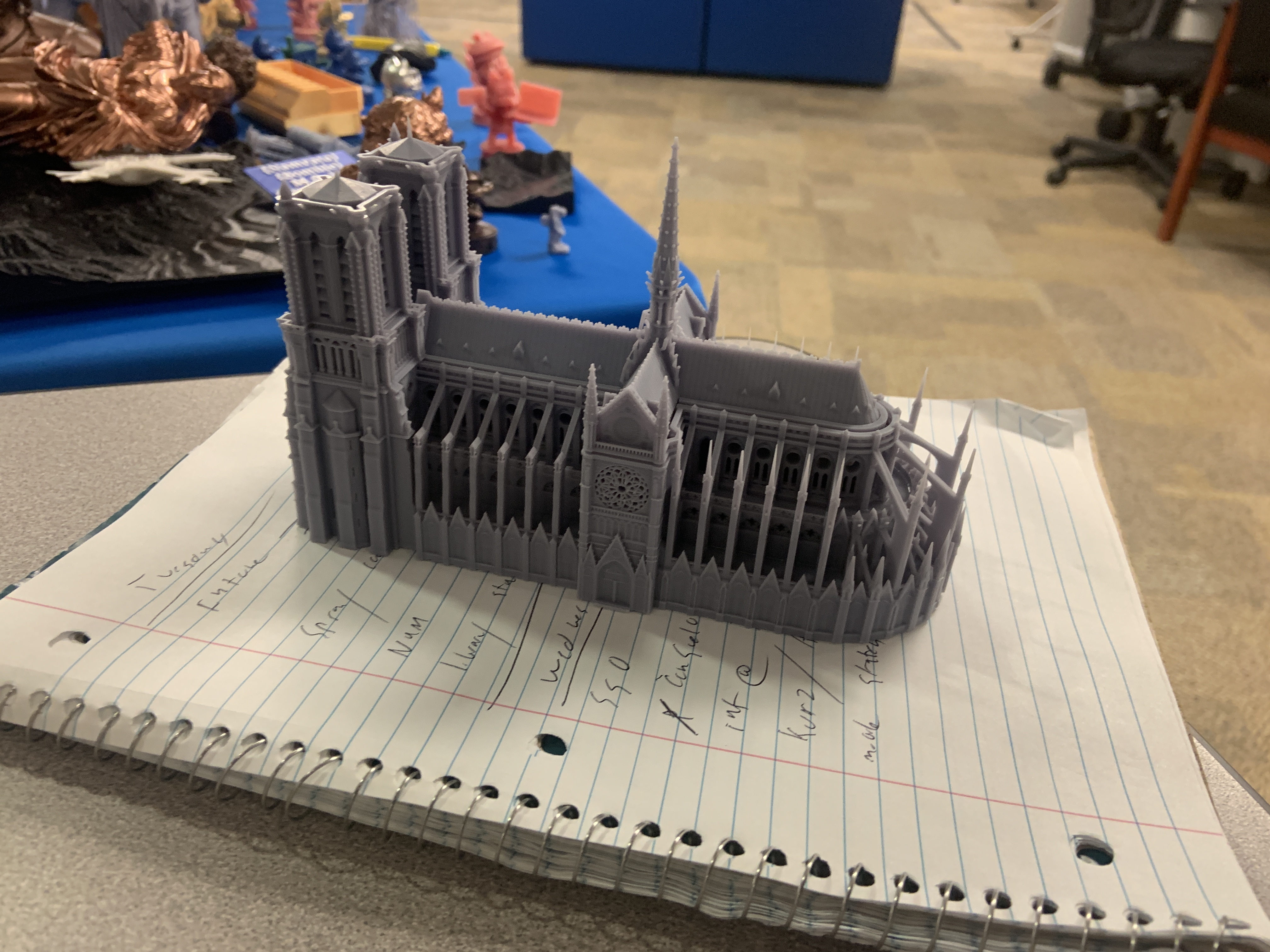
 Pieta at the Vatican
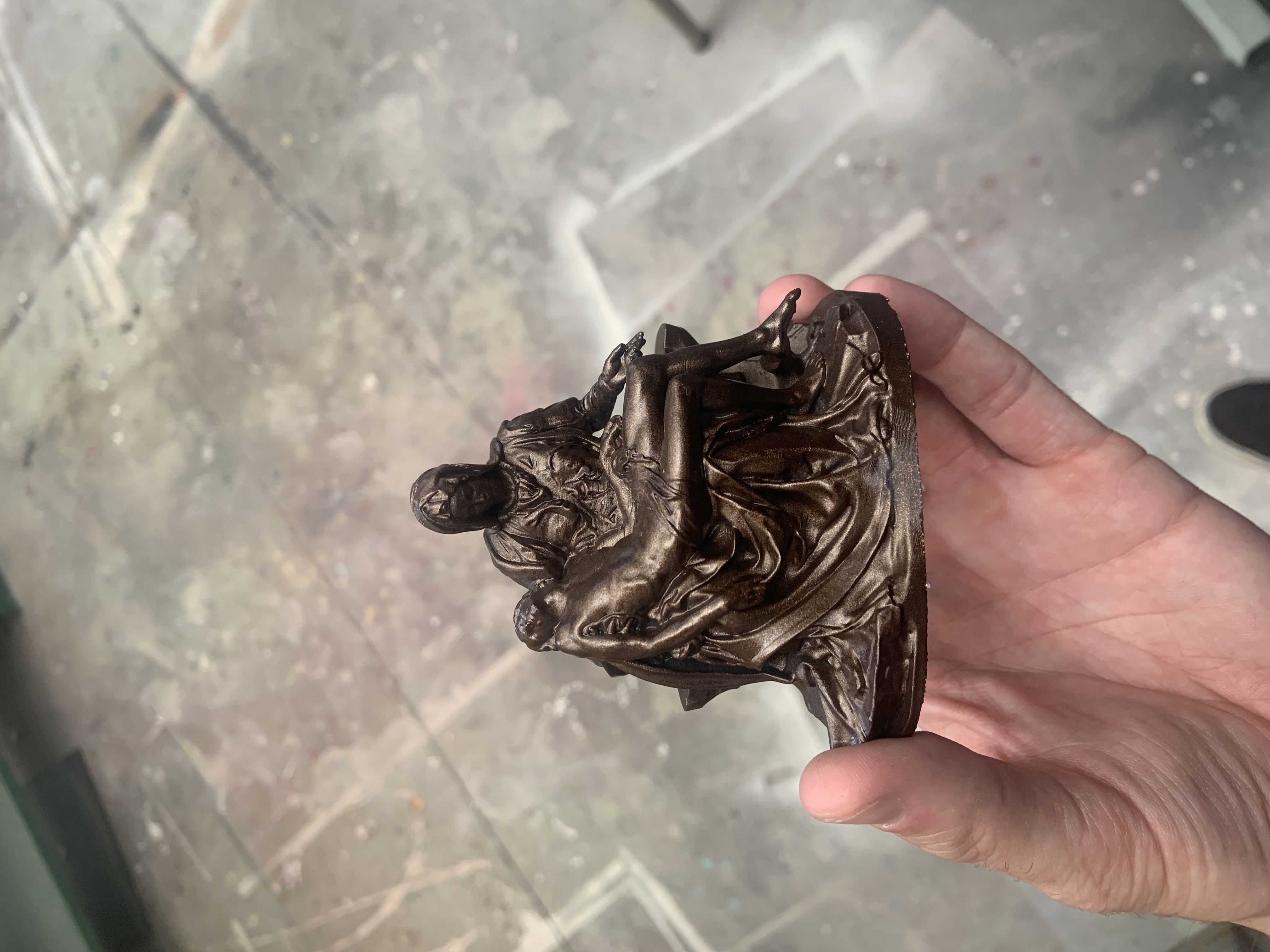
This was cool to make for a few reasons. First, the actual Pieta is MASSIVELY roped off from visitors. You can't even be in the same room as it. But now, you can hold it in your hand and admire all the details. Second, the actual Pieta was attacked by a person with a hammer in the 70's, and I came in one day to see that my Pieta print had been damaged in the same spot.
Pieta at the Vatican
This was cool to make for a few reasons. First, the actual Pieta is MASSIVELY roped off from visitors. You can't even be in the same room as it. But now, you can hold it in your hand and admire all the details. Second, the actual Pieta was attacked by a person with a hammer in the 70's, and I came in one day to see that my Pieta print had been damaged in the same spot.
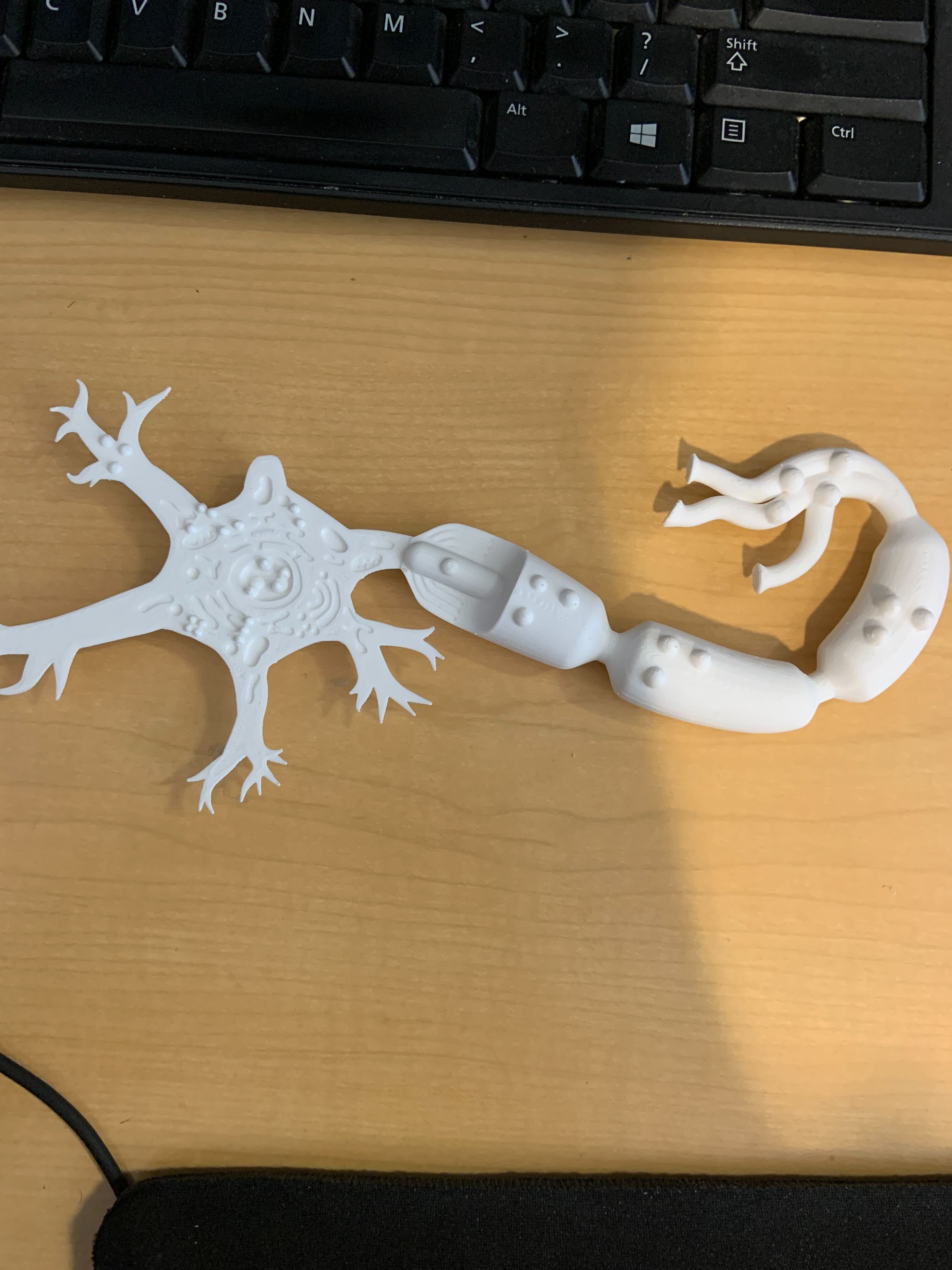 Neuron Tactile Model
This is one of the tactile models I made for a student who was studying psychology, and wanted to wanted to know what a neuron looked like. I put a QR code on the back of it that was related to the braille markings (G, for example which is 4 dots, was linked to Golgi Body).